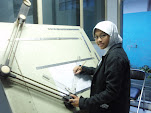
Art and creativity are the cornerstone of my life… and for me to say that art has no value would be an admission that my life is without value. Cosmically speaking, my life may be insignificant—but you won’t ever find that sentiment supported in my actions and personal beliefs!
Any form of creative art is immensely valuable in an emotional, sentimental and cultural way. Art enhances our ability to communicate ideas and feelings in ways that words fail—how and why this is I am not capable of explaining. But there is definitely something very powerful in a well wrought painting, musical score, photograph, movie or poem; an image of an anguished child wrapped in a blanket of dirty rags and ailing with empty eyes may touch us in a way that the words “The kids are hungry” cannot.
There is something more poignant about sensations (images, sounds, smells,feelings) than abstractions. The artist who learns the lesson of “Show, Don’t Tell” has taken one step into the realm of wise master.
While no individual piece of art is, in my opinion, eternally and objectively more valuable than the next, there is something called “great art” that sets apart from juvenile art. I cannot define the criteria—but I can tell you when I see or hear it! Of course, the problem is that my definition of great art may not equate to yours or the next critic’s opinion.
Art serves as a powerful motivator, more for the artist than the critic and reviewer—and probably more for the artist than the fan. An artist is something of an obsessed fanatic forever on a quest tocreatethe most compelling and moving piece of art. An artist grows through his art; each new piece extends the limit of who he is and who he will always be. Artists seek longevity and even immortality through their art! With each new piece of art finished, an artist has refined the definition of who he is—for now anyone who sees or hears his results will know something of the creator and his vision and hopes and fears.
Being creative is, in itself, a valuable talent and trait. Creativity is a gift of humanity that is only minimally known outside our species. It is the very reason of our success in all areas of life—even beyond art. Creativity is the trait of humans that allows us to take what we have and make something new and novel. Business, child-rearing, science and technology all rely on varying levels and kinds of creativity for success. Art is just another form of creativity—sort of an unleashed and unpredictable oracle built into our genes.
I believe that the main value of art is in its process rather than results—that the act of creating new things expands us and teaches us new ways to reach goals. Being creative is the true value of being artistic. This individual process of growing through creative arts helps us produce varying new vistas on humanity that can further help the next generation grow in its own world of creative art. In such a view, the individual growth each artist achieves increases the whole culture, because it helps fill the world with gifted environments that encourage young artists to seek their own artistic journeys.
Methodology
We choose Random Word for our methodology
SITUATION or PROBLEM : Art as Multimedia
RANDOM WORD : River
River
STRONG
FLOW
FRESH
Explanation:
a.STRONG : Art as multimedia should be strong enough, like have a special characteristic. To be a good artist we supposed to have a character in every single artwork that we have done. So there is no one can do plagiarism of our work.
b.FLOW : The developing of art as multimedia is flow like a river that always show or come out with a new idea continuously as water in the river that is never stop to flow. Also always improve from in the past to the present even to the future.
c.FRESH : Art as multimedia always comes out with a new and unique idea, fresh idea like something that we can feel if we see the river. No bored because we see a new thing that can make our mind becoming fresh.
IDEA GENERATION
STRONG art as multimedia
FLOW art as multimedia
FRESH art as multimedia
FINAL ARTWORK
After we make our idea generation we start to make our final artwork with combine that
With have done and arrange them in to some of moving picture
Like movie but we done it in the power point
First thing that we made is sketching about our final work to made easily for us in arrange the image…this is some of the our sketch for it,,
This week is already in week 14 thats means our class will be done in this week
i just want to share about what that i get it during in this class
Creative Studies class actually an interesting class,
where we get some idea about how to be an creative people.
Creative is important for us especially for FCM student like us.
We suppose to be an good designer...if we want to be a succsess in our future life..
how to be like that the answer just one word that is CREATIVE.
In this lecture we study about the explanation about CREATIVITY some theory about creativity tha can make us know and improve our knowledge.
Also we srudy about methapor, random word, juxtaposition,
how to create mind mapping, how to work with teamwork and many other things.
All of them its very useful for us as a designer or artist. I hope with the knowledge that we have now, we can improve our artwork and be a greatest artist or designer in the future.
Lesson 2 NOVELTY, CREATIVITY, INNOVATION AND INVETION
The creative person is one who generates new ideas while the creative process is how these new ideas, solutions, and inventions are produced.
AMBIGUITY OF CREATIVITY
"Being creative is seeing the same thing as everybody else but thinking of something different" (Shekerjian, D.1990).
One of the many definitions of the word creativity. The definite definition of the word creativity has long been an argument among many scholar and researchers. (Amabile, 1996. P 19)
Creativity is the process of generating something new that has value. There are many new ideas and concepts, but some may not have value and hence may not be considered creative. A creation is something original that has value. (Haggins, 1995, p. 3)
Creativity does not happen inside people’s heads, but in the interaction between a person’s thoughts and a sociocultural context. It is a systemic rather than individual phenomenon. (Csikszentmihalyi, 1996, p.23)
Creativity involves the translation of our unique gifts, talents and vision into an external reality that is new and useful. It is important to be aware that creativity takes place unavoidably inside our own personal, social, and cultural boundaries. To understand creativity is not just to study the individuals but also social mechanisms that stimulated their idea and social network that recognized and spread their innovation.
As being mentioned before there are many aspects to creativity and one definition would include the ability to take existing objects and combines them in different ways for new purposes.
Innovation by definition is to bring in new ideas or make changes. (Oxford Dictionary) Definition from the American Heritage Dictionary of the English Language, innovation is the act of introducing something new. Ned Herrmann the founder of Herrmann International which deal with creative thinking in the corporation and the founder of Whole Brain Technology described, Creativity and Innovation are often used interchangeably but they are very different parts of the same process.
In other words, innovation is the process of turning ideas into practical reality. (Herrmann, 1999)
Explained by Stenrberg,
Beyond intelligence, there must also be wisdom because intelligence alone is not sufficient Wisdom is considered by Sternberg to be the balance between creativity and intelligence relegating the novel ideas according to their appropriateness. It may be easy enough to generate novel ideas, but wisdom will distinguish the reasonable from the unreasonable. A creative and intelligent person may produce a novel idea, but without wisdom, the novel idea may be “foolish” or inappropriate (Dickhut. J E)
According to Dr. Edward de Bono, the leading authority in the field of creative thinking. the human mind can be regarded as an insoluble mystery (de Bono). In his series of book on Lateral thinking, Dr de Bono, build up a picture of a 'special memory-surface' which resemble the mechanism of brain in selecting, processing and rejecting of information. He illustrates the mind's tendency to create and combine rigid patterns, to build myths, to polarize and divide, and then relates these mechanisms to the various modes of thinking such as natural, logical, mathematical, and lateral. (De Bono) As said by de Bono creativity is not 'natural' to human brain therefore a thinking skill needs to be develop in order to becomes creative. Nothing is more important than human thinking or thinking creatively. Thinking can be taught across all cultures, ages and abilities. It is not a matter of intelligence or of knowledge. "Creativity isn't magic. It's achievable!" (Leland,N. 1990)
Defining novelty
Novelty is the quality of being new. Although it may be said to have an objective dimension (e.g. a new style of art coming into being, such as abstract art or impressionism) it essentially exists in the subjective perceptions of individuals.
Subjective and Objective novelty
Subjective novelty is the apperception of something as being new by an individual person or a group of persons;
Objective novelty is something that is new for all humanity in its development through ages. It is unlikely, however, that even the most knowing and knowledgeable person boldly say that he knows everything that was before and take liberty to judge things from this standpoint.
The study of creativity that is based on the presumption of novelty aims to reveal the universal laws of its generation and to explain how originalworks are produced by using the old material and known procedures.
Originalityis not a decisive feature of creative work and Novelty in creativity is always based on what has been created before.
Defining Innovation
Innovation is the process of making improvements by introducing something new, the realization of a creative idea in a social context.
Innovation is a process by which an idea or invention is translated into a good or service for which people will pay.
To be called an innovation, an idea must be replicable at an economical cost and must satisfy a specific need.
Innovation involves deliberate application of information, imagination, and initiative in deriving greater or different value from resources, and encompasses all processes by which new ideas are generated and converted into useful products.
In business, innovation results often from the application of a scientific or technical idea in decreasing the gap between the needs or expectations of the customers and the performance of a firm's products.
In a social context, innovation is equally important in devising new collaborative methods such as alliance creation, joint venturing, flexible working hours, and in creating buyers' purchasing power through methods such as hire purchase.
Innovations are divided into two broad categories:
(1)Evolutionary innovations are brought about by numerous incremental advances in technology or processes and are of two types
(a) Continuous evolutionary innovations result in an alteration in product characteristics instead of in a new product, and do not require any user-learning or changes in his or her routine, examples are multi-blade shaving razor, fluoride toothpaste, and laptop computer;
(b) Dynamic continuous evolutionary innovations require some user-learning but do not disrupts his or her routine, examples are fax machines, instant photography, and held computers.
(2) Revolutionary innovations (called also discontinuous innovations) requirea good deal of user-learning, often disrupt his or her routine, and may even require new behavior patterns.
Examples are photocopier (xerography) machines, personal computers, and internet.
Innovation is synonymous with risk-taking and firms which introduce revolutionary products or technologies take on the greatest risk because they have to create new markets.
There are four types of creativity. Creative people fall into these four categories:
Aesthetic Organizers.
Boundary Pushers — those who take an existing idea and push it a little further.
Inventors — those who take existing knowledge and create new ideas — the Edisons of this world.
The rarest group: Boundary Breakers — the Leonardos and the Copernicuses.
"The best way to predict your future is to create it!"
-- Abraham Lincoln
The new and the old are not two completely different entities but rather the two sides of a coin. The new is always based on what was before and the one appears through another like the water under the ice for those who can see.
Art and creativity are the cornerstone of my life… and for me to say that art has no value would be an admission that my life is without value. Cosmically speaking, my life may be insignificant—but you won’t ever find that sentiment supported in my actions and personal beliefs!
Any form of creative art is immensely valuable in an emotional, sentimental and cultural way. Art enhances our ability to communicate ideas and feelings in ways that words fail—how and why this is I am not capable of explaining. But there is definitely something very powerful in a well wrought painting, musical score, photograph, movie or poem; an image of an anguished child wrapped in a blanket of dirty rags and ailing with empty eyes may touch us in a way that the words “The kids are hungry” cannot.
There is something more poignant about sensations (images, sounds, smells,feelings) than abstractions. The artist who learns the lesson of “Show, Don’t Tell” has taken one step into the realm of wise master.
While no individual piece of art is, in my opinion, eternally and objectively more valuable than the next, there is something called “great art” that sets apart from juvenile art. I cannot define the criteria—but I can tell you when I see or hear it! Of course, the problem is that my definition of great art may not equate to yours or the next critic’s opinion.
Art serves as a powerful motivator, more for the artist than the critic and reviewer—and probably more for the artist than the fan. An artist is something of an obsessed fanatic forever on a quest tocreatethe most compelling and moving piece of art. An artist grows through his art; each new piece extends the limit of who he is and who he will always be. Artists seek longevity and even immortality through their art! With each new piece of art finished, an artist has refined the definition of who he is—for now anyone who sees or hears his results will know something of the creator and his vision and hopes and fears.
Being creative is, in itself, a valuable talent and trait. Creativity is a gift of humanity that is only minimally known outside our species. It is the very reason of our success in all areas of life—even beyond art. Creativity is the trait of humans that allows us to take what we have and make something new and novel. Business, child-rearing, science and technology all rely on varying levels and kinds of creativity for success. Art is just another form of creativity—sort of an unleashed and unpredictable oracle built into our genes.
I believe that the main value of art is in its process rather than results—that the act of creating new things expands us and teaches us new ways to reach goals. Being creative is the true value of being artistic. This individual process of growing through creative arts helps us produce varying new vistas on humanity that can further help the next generation grow in its own world of creative art. In such a view, the individual growth each artist achieves increases the whole culture, because it helps fill the world with gifted environments that encourage young artists to seek their own artistic journeys.
Methodology
We choose Random Word for our methodology
SITUATION or PROBLEM : Art as Multimedia
RANDOM WORD : River
River
STRONG
FLOW
FRESH
Explanation:
a.STRONG : Art as multimedia should be strong enough, like have a special characteristic. To be a good artist we supposed to have a character in every single artwork that we have done. So there is no one can do plagiarism of our work.
b.FLOW : The developing of art as multimedia is flow like a river that always show or come out with a new idea continuously as water in the river that is never stop to flow. Also always improve from in the past to the present even to the future.
c.FRESH : Art as multimedia always comes out with a new and unique idea, fresh idea like something that we can feel if we see the river. No bored because we see a new thing that can make our mind becoming fresh.
IDEA GENERATION
STRONG art as multimedia
FLOW art as multimedia
FRESH art as multimedia
FINAL ARTWORK
After we make our idea generation we start to make our final artwork with combine that
With have done and arrange them in to some of moving picture
Like movie but we done it in the power point
First thing that we made is sketching about our final work to made easily for us in arrange the image…this is some of the our sketch for it,,
This week is already in week 14 thats means our class will be done in this week
i just want to share about what that i get it during in this class
Creative Studies class actually an interesting class,
where we get some idea about how to be an creative people.
Creative is important for us especially for FCM student like us.
We suppose to be an good designer...if we want to be a succsess in our future life..
how to be like that the answer just one word that is CREATIVE.
In this lecture we study about the explanation about CREATIVITY some theory about creativity tha can make us know and improve our knowledge.
Also we srudy about methapor, random word, juxtaposition,
how to create mind mapping, how to work with teamwork and many other things.
All of them its very useful for us as a designer or artist. I hope with the knowledge that we have now, we can improve our artwork and be a greatest artist or designer in the future.
Lesson 2 NOVELTY, CREATIVITY, INNOVATION AND INVETION
The creative person is one who generates new ideas while the creative process is how these new ideas, solutions, and inventions are produced.
AMBIGUITY OF CREATIVITY
"Being creative is seeing the same thing as everybody else but thinking of something different" (Shekerjian, D.1990).
One of the many definitions of the word creativity. The definite definition of the word creativity has long been an argument among many scholar and researchers. (Amabile, 1996. P 19)
Creativity is the process of generating something new that has value. There are many new ideas and concepts, but some may not have value and hence may not be considered creative. A creation is something original that has value. (Haggins, 1995, p. 3)
Creativity does not happen inside people’s heads, but in the interaction between a person’s thoughts and a sociocultural context. It is a systemic rather than individual phenomenon. (Csikszentmihalyi, 1996, p.23)
Creativity involves the translation of our unique gifts, talents and vision into an external reality that is new and useful. It is important to be aware that creativity takes place unavoidably inside our own personal, social, and cultural boundaries. To understand creativity is not just to study the individuals but also social mechanisms that stimulated their idea and social network that recognized and spread their innovation.
As being mentioned before there are many aspects to creativity and one definition would include the ability to take existing objects and combines them in different ways for new purposes.
Innovation by definition is to bring in new ideas or make changes. (Oxford Dictionary) Definition from the American Heritage Dictionary of the English Language, innovation is the act of introducing something new. Ned Herrmann the founder of Herrmann International which deal with creative thinking in the corporation and the founder of Whole Brain Technology described, Creativity and Innovation are often used interchangeably but they are very different parts of the same process.
In other words, innovation is the process of turning ideas into practical reality. (Herrmann, 1999)
Explained by Stenrberg,
Beyond intelligence, there must also be wisdom because intelligence alone is not sufficient Wisdom is considered by Sternberg to be the balance between creativity and intelligence relegating the novel ideas according to their appropriateness. It may be easy enough to generate novel ideas, but wisdom will distinguish the reasonable from the unreasonable. A creative and intelligent person may produce a novel idea, but without wisdom, the novel idea may be “foolish” or inappropriate (Dickhut. J E)
According to Dr. Edward de Bono, the leading authority in the field of creative thinking. the human mind can be regarded as an insoluble mystery (de Bono). In his series of book on Lateral thinking, Dr de Bono, build up a picture of a 'special memory-surface' which resemble the mechanism of brain in selecting, processing and rejecting of information. He illustrates the mind's tendency to create and combine rigid patterns, to build myths, to polarize and divide, and then relates these mechanisms to the various modes of thinking such as natural, logical, mathematical, and lateral. (De Bono) As said by de Bono creativity is not 'natural' to human brain therefore a thinking skill needs to be develop in order to becomes creative. Nothing is more important than human thinking or thinking creatively. Thinking can be taught across all cultures, ages and abilities. It is not a matter of intelligence or of knowledge. "Creativity isn't magic. It's achievable!" (Leland,N. 1990)
Defining novelty
Novelty is the quality of being new. Although it may be said to have an objective dimension (e.g. a new style of art coming into being, such as abstract art or impressionism) it essentially exists in the subjective perceptions of individuals.
Subjective and Objective novelty
Subjective novelty is the apperception of something as being new by an individual person or a group of persons;
Objective novelty is something that is new for all humanity in its development through ages. It is unlikely, however, that even the most knowing and knowledgeable person boldly say that he knows everything that was before and take liberty to judge things from this standpoint.
The study of creativity that is based on the presumption of novelty aims to reveal the universal laws of its generation and to explain how originalworks are produced by using the old material and known procedures.
Originalityis not a decisive feature of creative work and Novelty in creativity is always based on what has been created before.
Defining Innovation
Innovation is the process of making improvements by introducing something new, the realization of a creative idea in a social context.
Innovation is a process by which an idea or invention is translated into a good or service for which people will pay.
To be called an innovation, an idea must be replicable at an economical cost and must satisfy a specific need.
Innovation involves deliberate application of information, imagination, and initiative in deriving greater or different value from resources, and encompasses all processes by which new ideas are generated and converted into useful products.
In business, innovation results often from the application of a scientific or technical idea in decreasing the gap between the needs or expectations of the customers and the performance of a firm's products.
In a social context, innovation is equally important in devising new collaborative methods such as alliance creation, joint venturing, flexible working hours, and in creating buyers' purchasing power through methods such as hire purchase.
Innovations are divided into two broad categories:
(1)Evolutionary innovations are brought about by numerous incremental advances in technology or processes and are of two types
(a) Continuous evolutionary innovations result in an alteration in product characteristics instead of in a new product, and do not require any user-learning or changes in his or her routine, examples are multi-blade shaving razor, fluoride toothpaste, and laptop computer;
(b) Dynamic continuous evolutionary innovations require some user-learning but do not disrupts his or her routine, examples are fax machines, instant photography, and held computers.
(2) Revolutionary innovations (called also discontinuous innovations) requirea good deal of user-learning, often disrupt his or her routine, and may even require new behavior patterns.
Examples are photocopier (xerography) machines, personal computers, and internet.
Innovation is synonymous with risk-taking and firms which introduce revolutionary products or technologies take on the greatest risk because they have to create new markets.
There are four types of creativity. Creative people fall into these four categories:
Aesthetic Organizers.
Boundary Pushers — those who take an existing idea and push it a little further.
Inventors — those who take existing knowledge and create new ideas — the Edisons of this world.
The rarest group: Boundary Breakers — the Leonardos and the Copernicuses.
"The best way to predict your future is to create it!"
-- Abraham Lincoln
The new and the old are not two completely different entities but rather the two sides of a coin. The new is always based on what was before and the one appears through another like the water under the ice for those who can see.
This is my journal when i took MLC in my Betha Yearz. For sure in my lovely university MULTIMEDIA UNIERSITY as a FCM (Facuty of Creative Multimedia) student,, hehehe